From Haunted Valley to Hero Dirt: How the Yacolt Burn Experience Came to Be
Words by Chris Bloom, Southwest Chapter
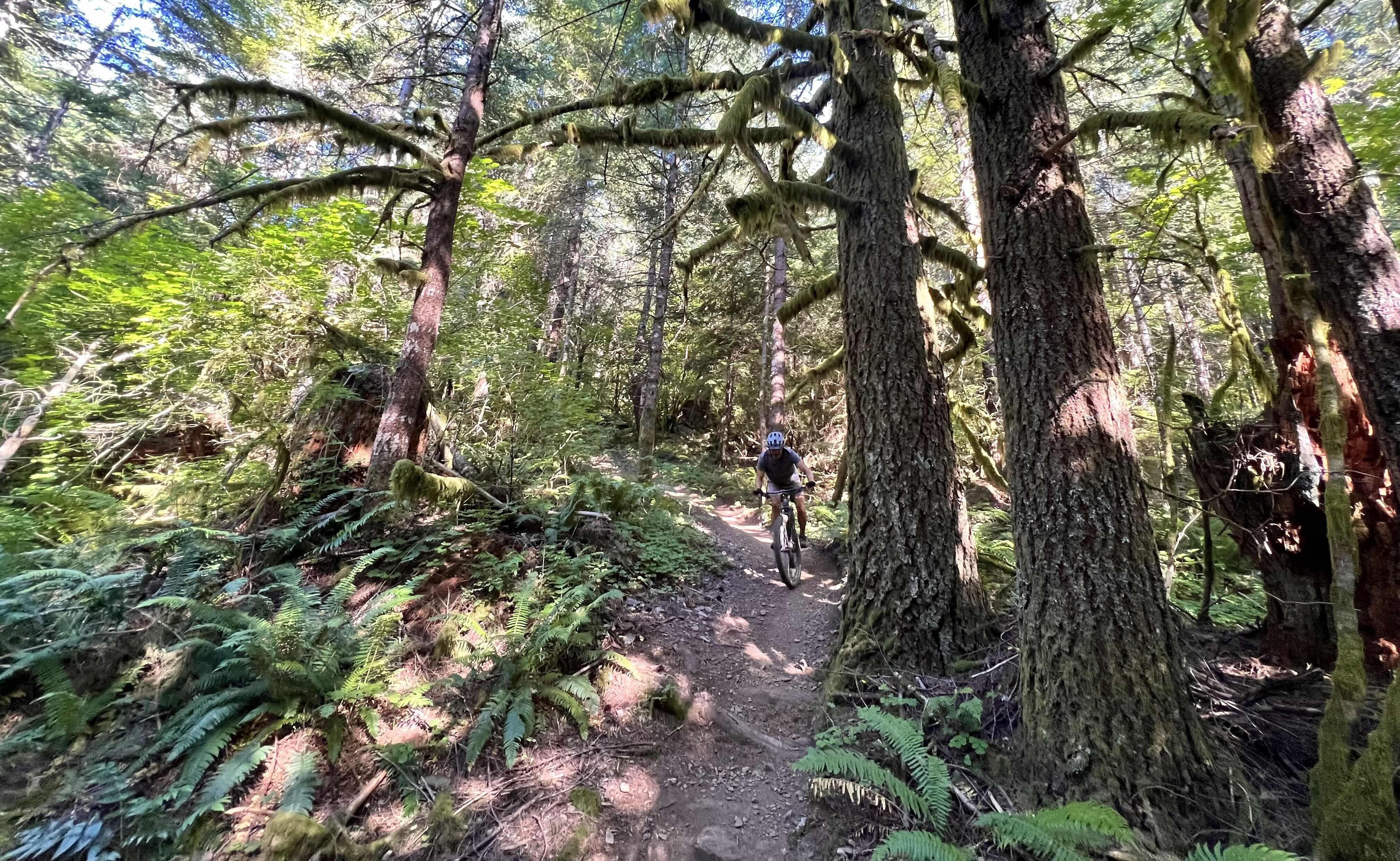
If you've ever shuttled up Larch Mountain, pointed your bike down Cold Creek or Thrillium or Sixth Sense, and rolled back to the Yacolt Burn Trailhead grinning like an idiot, congratulations. You've just participated in one of the Pacific Northwest's more improbable happy endings.
You already know about the fire. It's in the name and it's in the soil if you dig down a few inches. What you might not know is everything that had to happen between 1902 and your last lap down Thrillium to turn a 238,000-acre scorch mark into one of the best trail systems in the Pacific Northwest. That part is a much better story.
First, About That Name
The name itself is a warning. "Yacolt" comes from a Klickitat word that, depending on who's translating, means "haunted valley" or "place of evil spirits." The story goes that five children went out picking berries in this valley and were never seen again. Taken, it was said, by a demon. The demon's name was Yacolt.
That's the name that came with the place, and it predates everything else in this story by a long shot. The fire, the trails, the shuttle rigs, all of it showed up later and pasted itself onto a word that was already doing serious work.
The Fire
On September 11, 1902, the demon showed up for its real curtain call.
A bunch of small fires across Clark, Cowlitz, and Skamania counties (most of them sparked by loggers burning slash or locomotives throwing cinders) caught a freak easterly wind. This is a particular Pacific Northwest phenomenon. When high pressure settles over eastern Washington, the Columbia Gorge turns the entire Cascade Range into a giant chimney, and a hot, dry "devil wind" rips westward at the worst possible time of year.
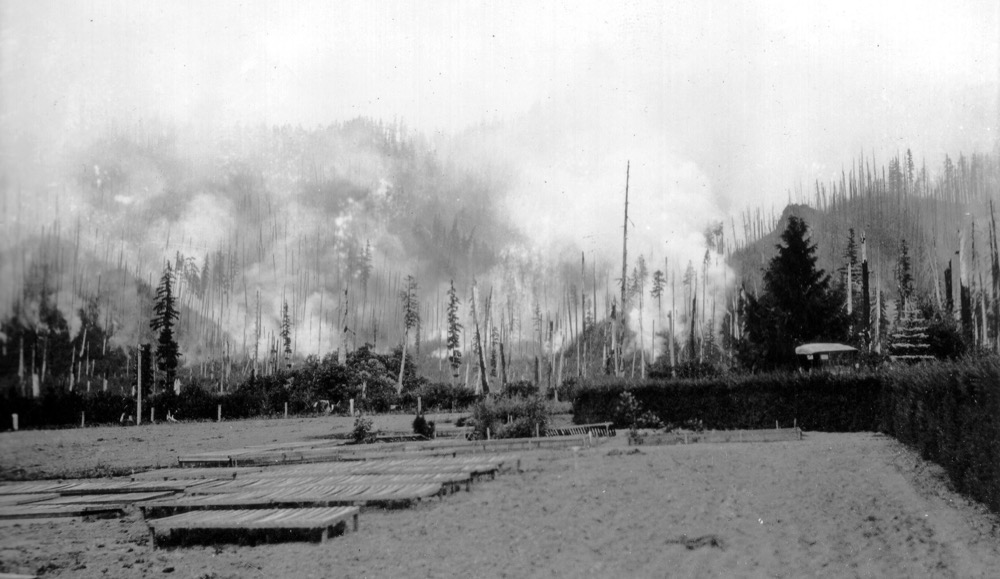
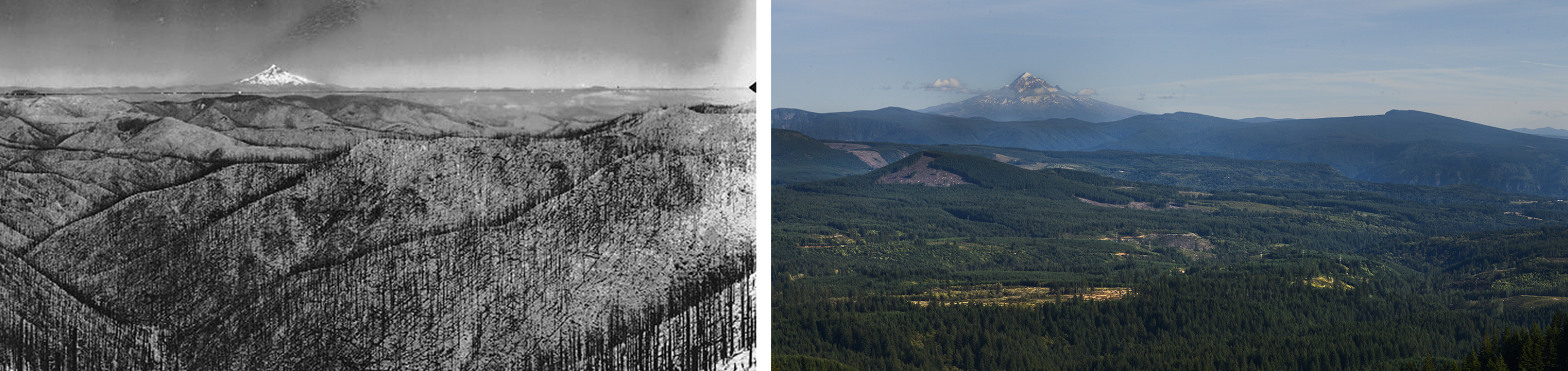
The fires merged. In 36 hours, they traveled 30 miles, burned 238,920 acres, and killed 38 people. The town of Yacolt itself got close enough that the paint on all 15 of its buildings blistered before the wind (mercifully) changed direction and carried the blaze north toward the Lewis River, where it finally burned itself out. Ash fell in Portland. Street lamps came on at noon in Seattle. Ships on the Columbia had to navigate by compass.
The fire rewrote Washington state forest policy almost overnight. A state fire warden was appointed the following spring. Private timber companies banded together in 1908 to fund their own fire-prevention network. And then the reforestation effort, which dragged on for most of the 20th century, passed through the hands of the Civilian Conservation Corps in the 1930s, federal replanting crews, and eventually the DNR's Yacolt Burn Rehabilitation Project in the 1950s.
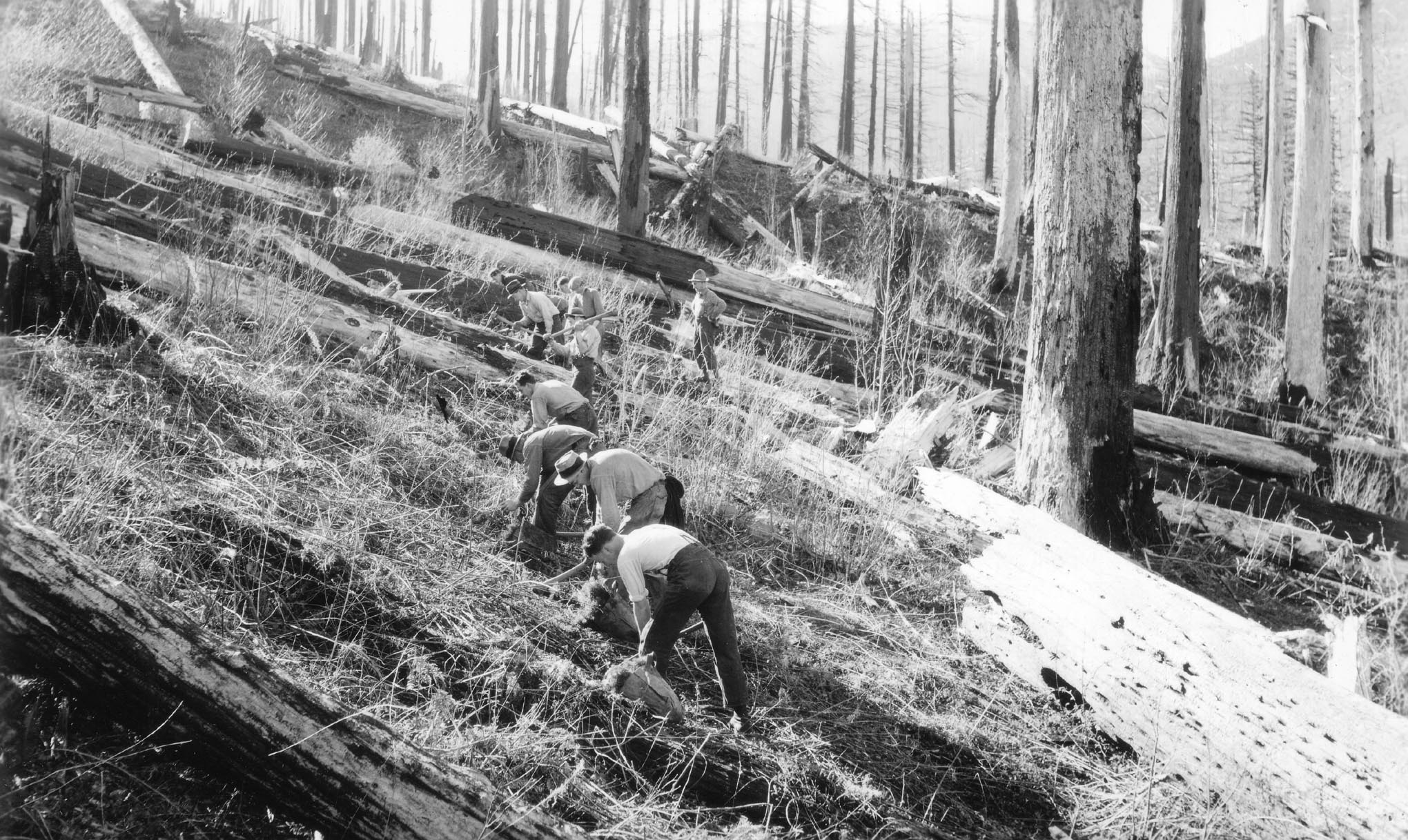
That whole century-long campaign essentially invented modern Pacific Northwest fire management as a side effect of trying to bring one forest back.
Which is a long way of saying: the forest you're riding in is a replacement forest. The original one exploded.
The Outlaw Era
Now skip forward almost a century. Past sixteen more fires between 1910 and 1924. Past the big one in 1952. Past DNR turning the land into a working state forest. Touch down in the late 1990s and early 2000s, when a handful of Clark County mountain bikers looked at these endless logging roads and thought: huh.
Long before any of this was legal, locals were shuttling. They'd drive up past the Yellow Gate (the spot where the bathroom and upper parking lot now sit), get to the top of Ross's Grade, and bomb back down. If you wanted a pedal-powered day, the Tarbell Trail had been there for about a hundred years, originally cut by equestrians and hikers. People also rode Pyramid, Silver Star, and Jones Creek, where there was a short-lived downhill racing scene in 2001 and 2002 put on by a crew called the Cascade Downhillers.
These were the outlaw days, and the riders who were there will tell you they were the best days. Beautiful trails, unofficial status, a little sketchy around the edges, and all of it running on the quiet agreement that DNR wasn't paying close attention.
Cold Creek Mountain Bikers (or: How to Make DNR Pay Attention Without Getting In Trouble)
About twenty years ago (the math is always a little fuzzy, so call it the mid-2000s), a local rider named Eric Albers (this is our Eric; he still runs the chapter today) did something extremely radical.
He called the DNR.
He said: Hi. You know that hundred-year-old trail up on Larch Mountain that everyone's riding? What if we maintained it? Officially?
That phone call was the founding move of what became the Cold Creek Mountain Bikers. The group started running work parties and cleaning up Cold Creek. Then they began adding rider-specific features, carefully and incrementally: berms and little bumps on the edges of corners. That's what made an old hiker-and-horse trail rideable at speed.
This is the part of every trail's origin story that nobody remembers properly: the good trails don't happen because some pro with a Red Bull helmet showed up. They happen because a bunch of regular people picked up McLeods and Pulaskis and showed up on a Saturday. Every Saturday. For years. In the rain.
The Eight-Year Thrillium Saga
After a while, the club got ambitious. They wanted a downhill-specific trail. Something that wasn't shared with horses and hikers and the occasional aggrieved trail runner. Something designed from the drop-in for bikes.
They pitched the DNR. The DNR said maybe. Then hmm. Then have you considered this process? Then this other process? Then, eight years later, DNR finally said yes.
The crew was on the ground the whole time, digging what would become Thrillium by hand, out in the middle of the woods, wondering whether any of it would ever get sanctioned. Todd McCarthy, who is one of the humans most responsible for what the Yacolt Burn Experience looks like today, remembers being out there with a shovel thinking what are we even doing? The moment it clicked that this was actually going to happen was the day excavators showed up. That was real. That was a legal jump line. That was the first purpose-built, legal downhill trail in the entire region.
None of it would have happened without a DNR ranger named Jessica, who saw what the local riders were building and became the inside champion they needed. After Thrillium opened, the chapter put on a pro-am race that drew 100 to 150 riders and effectively announced the Yacolt Burn to the broader Pacific Northwest mountain bike scene. Jessica asked for more events like it, then, in that very DNR way, got transferred two years later. There may or may not be a bench somewhere up on Upper Sixth Sense with her name on it. The record is hazy. What's not hazy is that the trails you're riding exist in part because one person inside the agency decided to believe in the idea.
Sixth Sense, the Rebrand, and the Arrival of the Dirt Cup
A couple of years after Thrillium opened, something called the 17-mile plan took shape: a roadmap for stitching together a proper trail network. Appaloosa. Vista Ridge. And Sixth Sense, formerly known as "Trail 6" during construction, which was then renamed for obvious M. Night Shyamalan reasons.
In 2018, the Cold Creek Mountain Bikers made things official. They merged into Evergreen Mountain Bike Alliance (Washington's largest mountain bike advocacy nonprofit, founded way back in 1989 as a scrappy little outfit called the Backcountry Bicycle Trails Club) and rebranded as the Southwest Chapter. The name change reflected a growing footprint: not just Cold Creek anymore, but all of southwest Washington.
In June 2019, the chapter cut the ribbon on Sixth Sense, the first trail Evergreen Southwest designed and built from scratch. That same summer, the Cascadia Dirt Cup enduro series rolled into the Yacolt Burn for the first time. The place was officially on the map.
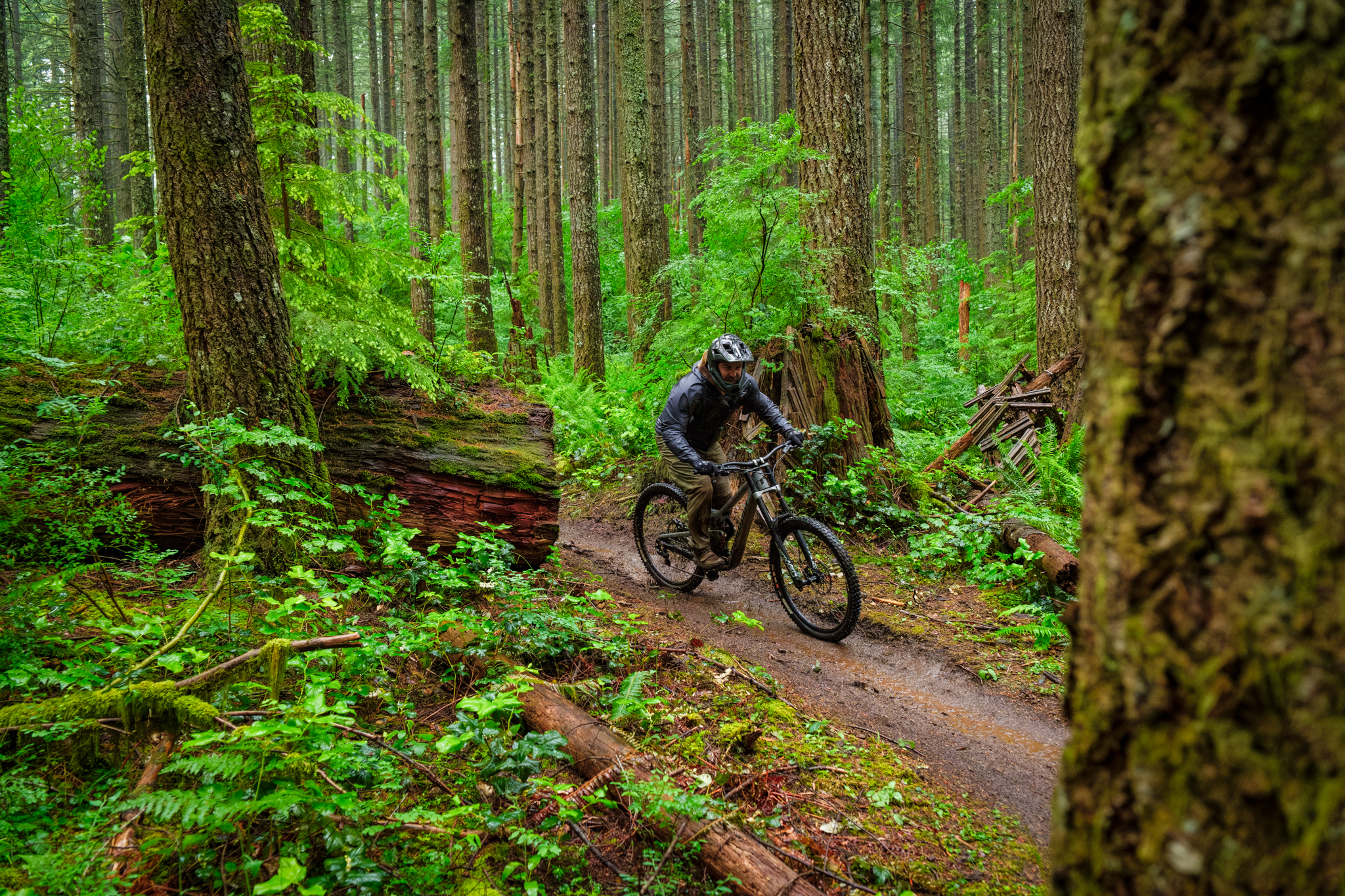
Which Brings Us to the Yacolt Burn Experience
YBE (as it's known once you've been to one) is a post-COVID baby. The first one rolled out in 2021, during the great bike boom when half the country was suddenly trying to figure out where the hell to ride. Eric Albers came up with the idea. Todd McCarthy took on the logistics and more or less soloed the planning for the first three years, which is a genuinely insane amount of work. Last year, Evergreen named him statewide Volunteer of the Year. Correctly.
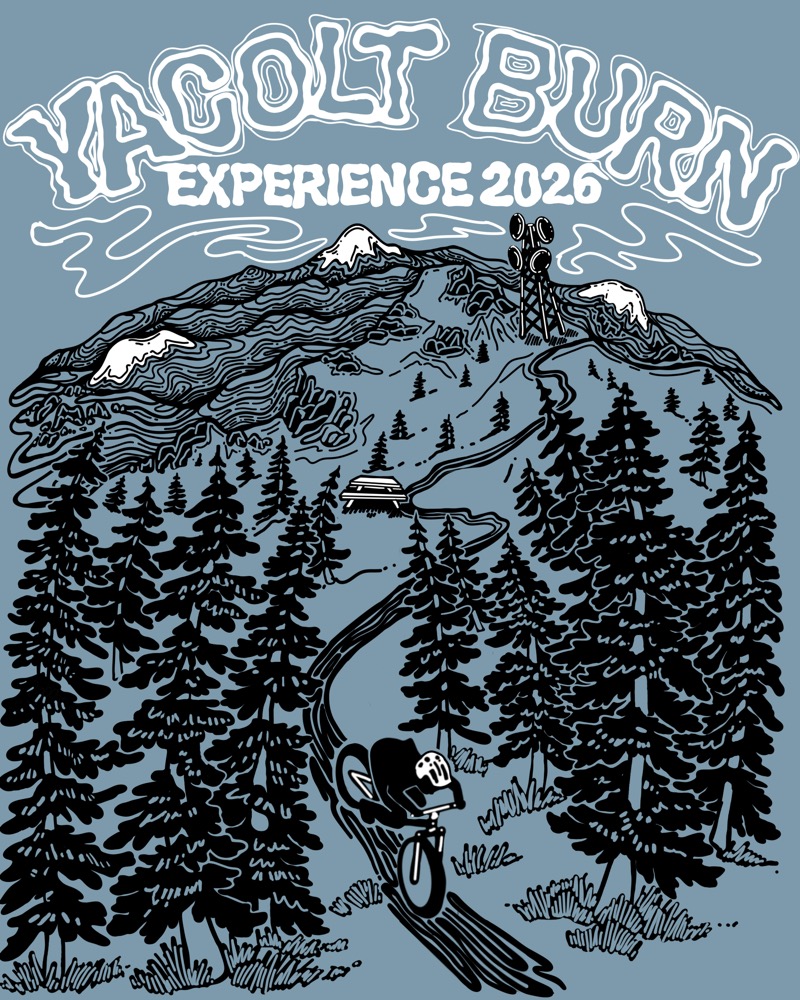
Here's what YBE actually is: a full day of shuttling at one of the best trail systems in Washington.
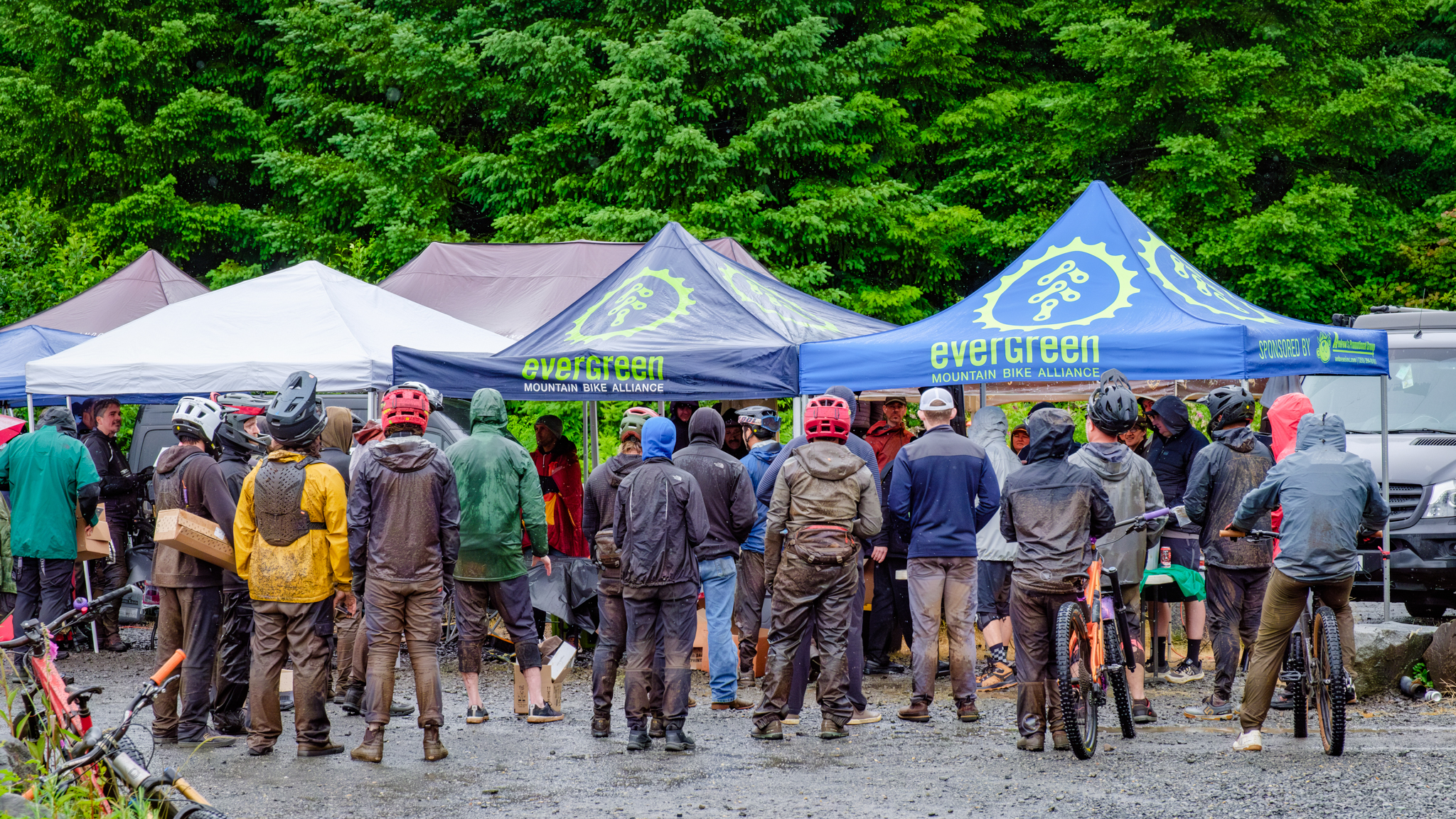
You show up at the Yacolt Burn Trailhead. You get your wristband. You eat things. You meet people. You demo bikes from Propain and Norco, who both roll in with full fleets for the day. You enter the raffle (featuring sponsors PNW Components, Red Bull, Formula 100, Kenda Tires, Evo, Chris King, DT Swiss, Gravity Cartel, Cushcore, Crankbros, SRAM, Pull Cafe, You Move Me, All City Print, and Camas Bike & Sport). And every fifteen minutes or so, a shuttle rig (usually a donated U-Haul) pulls up, loads up bikes and riders, and drops you at the top of the system at Five Corners. You point downhill. You ride Cold Creek, or Sixth Sense, or Thrillium (if you caught the shuttle to the upper lot), all the way back to the lower lot. You get in line. You do it again.
The U-Haul thing, by the way, is a direct inheritance from the Cascade Downhillers racing era, where renting box trucks and strapping bikes to the walls was, for years, how you shuttled a race. The YBE crew has since optimized the whole operation. Smaller, lighter trucks that turn around faster. And the trucks themselves are often donated by local companies. The drivers are almost always non-riders: volunteers, spouses, friends, family members of participants, and folks who are just extremely good at backing up a large vehicle in a small gravel lot. If you've never hugged a U-Haul driver, you haven't lived. The vibe at the top of the hill when that roll-up door opens and you and your bike roll down that gangway is one of the great small joys in this sport.
Some Logistical Trivia You Don't Need But Will Enjoy
- The event is capped at 299 attendees. At 300, the permit triggers a requirement for dedicated resources, which gets expensive fast.
- The parking lot fills up. Get there early if you want to park close. It's half the fun anyway: bikes everywhere, people you haven't seen since last season, someone inevitably loaning someone else a shock pump.
- It sells out. Every year. Even the years it gets rained on (roughly half of them so far). We have a 50/50 track record with weather, which may not impress you until you realize we chose the third Saturday of June specifically because it's the safest date for dry trails.
- DNR shows up. They come out to make sure everyone's playing by the rules. They also come out because, deep down, they're rooting for this.
Get in the Truck
When: June 20th, 9am - 4pm. Where: Yacolt Burn Trailhead (the lower lot) How many: 299 of your about-to-be-new best friends What's included: All-day shuttles (9am - 4pm), demo fleets from Propain Bicycles and Norco, food, raffle prizes, vendors, and (if we can pull it off) a DJ, because we're leaning on our friends at Red Bull to sponsor one Cost: $35 pre-registration (members), $60 pre-registration (non-members), $70 day-of. Online registration closes June 20th.
Register as soon as it opens. It will sell out. It always does.
A Note on Membership (The Part Where I Ask You for Money)
If you take one thing from this blog post (other than the fact that you are riding on top of a fire demon), let it be this: the trails you love are not free.
They cost money and time. The time is donated, mostly, by volunteers. The money comes from memberships and events like YBE. These two things are what keep the lights on. Literally. Evergreen Mountain Bike Alliance is the largest statewide mountain bike nonprofit in the country, with a multi-million-dollar annual budget, more than a dozen full-time year-round trail builders, and maintenance agreements with public land managers across Washington. All of that is powered by roughly 9,000 members and a whole lot of events.
An Evergreen Basic membership is $50 a year.
When you join, you pick a chapter. If you pick Southwest, your dues stay here, in the Yacolt Burn, in our dirt, going directly toward the berm that just saved your weekend from mediocrity. You also get:
- Discounts on Evergreen events (including YBE)
- A sticker
- Exclusive benefits from Outdoor Research, PNW Components, Propain Bikes, Trailforks Pro, Backslope Tools, and more!
- Member-only updates on what's being built, what's being planned, and what we're fighting for at the land-management level
- The warm moral righteousness of knowing you're directly supporting the people who keep your local trails rideable
Membership tiers go up from there. Builder at $100/year covers up to five household members and throws in a trucker hat. Team Epic at $500/year gets you gala invites and serious gear. But $50 is the on-ramp. $50 is less than the cost of a decent tire, and frankly, more useful than one. You can always replace a Minion. You cannot as easily replace a trail system.
and pick "Southwest" from the chapter dropdown.
One Last Thing
The story of the Yacolt Burn is the story of a place that has died and come back several times. A forest that burned to ash, regrew, burned again, got replanted by hand by CCC crews and correctional camp crews and foresters who genuinely cared. A trail system that existed in the gray zone for twenty years before anyone in authority admitted it was worth caring about. A mountain bike club that started as a handful of friends with shovels and a phone number for DNR and grew into a chapter of the biggest state mountain bike nonprofit in the country. An event that got invented, essentially, by two guys and a spreadsheet after a pandemic.
None of this was supposed to exist. All of it exists.
Come ride it.
See you at the Yacolt Burn.
The Yacolt Burn Experience benefits Evergreen Mountain Bike Alliance – Southwest Chapter. Endless thanks to Todd McCarthy, Victor Sandrin, Eric Albers, and the many volunteers, shuttle drivers, excavator operators, DNR personnel (especially Jessica, wherever she is now), and generations of trail stewards who built this place one shovelful at a time.