Building Trail 'C' at Raging River: Field Notes by Pro Builders Scott & Michael
Get the inside scoop on trail ‘C’ (official name TBA - stay tuned!), one of the last trails we are constructing at Raging River as part of this multi-phase, decade-long project. This isn’t your average straight-line trail; it’s a masterclass in sustainable engineering, from precision water management to creative culvert design.
Read on for trail notes from our pro builders: Michael Fischer, Trail Crew Lead; Scott Miller, Trail Builder II, and others.
Field notes & photos by Scott Miller, Trail Builder II, and Michael Fischer, Crew Lead
Unpredictable Changes & Reversals
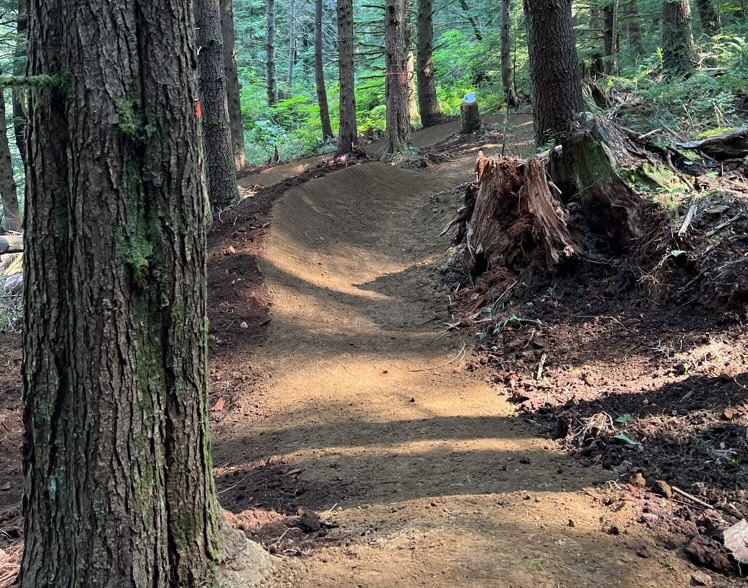
Topsy-turvy / curvy-swervy is how we would describe Trail C. If you look up topsy-turvy in the dictionary (it's actually a word) it means unpredictable changes and reversals. It is a flow trail, but it isn’t as straight forward as some others in the trail system. It will take you more than a couple laps to learn/master it, no matter who you are.
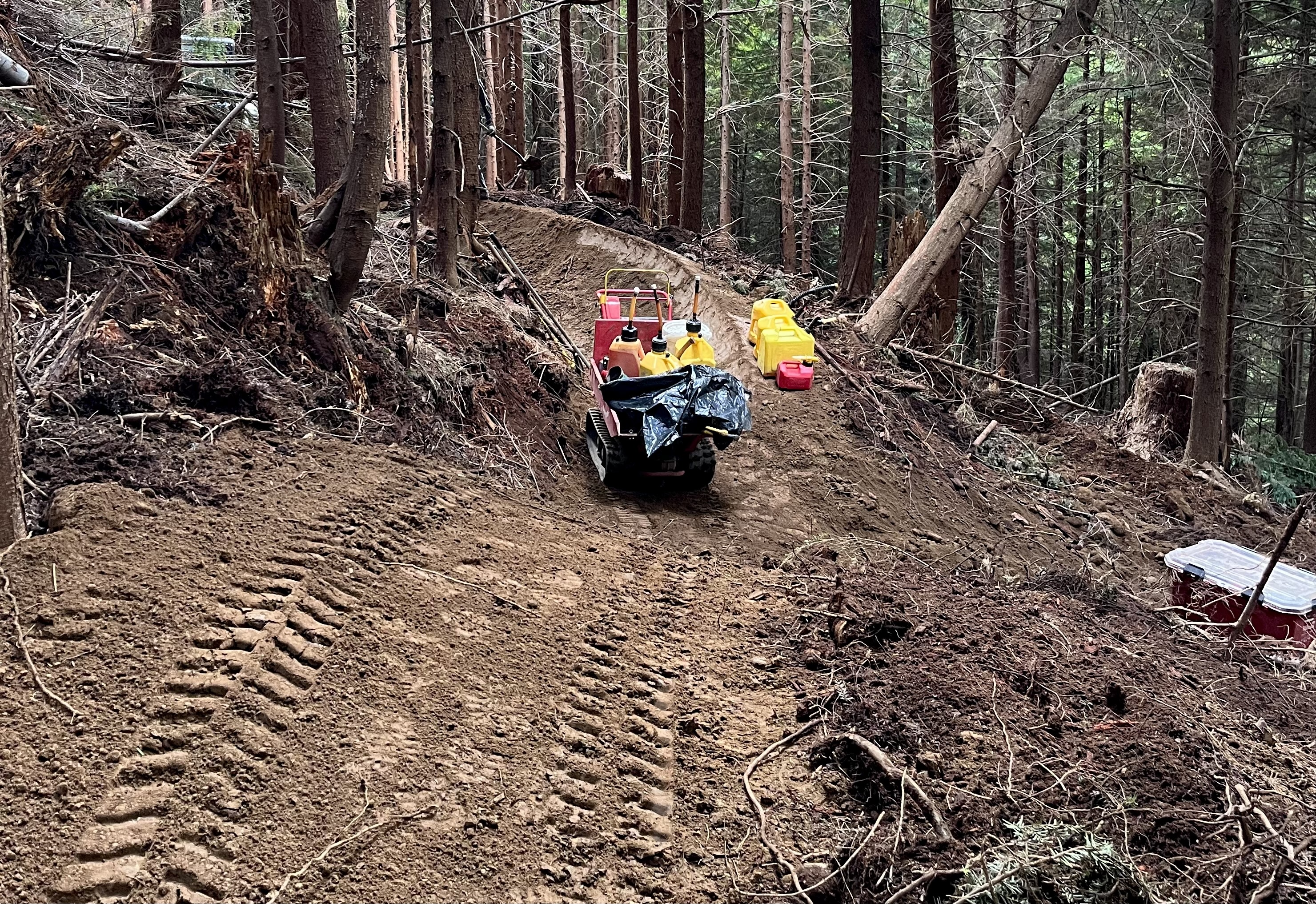
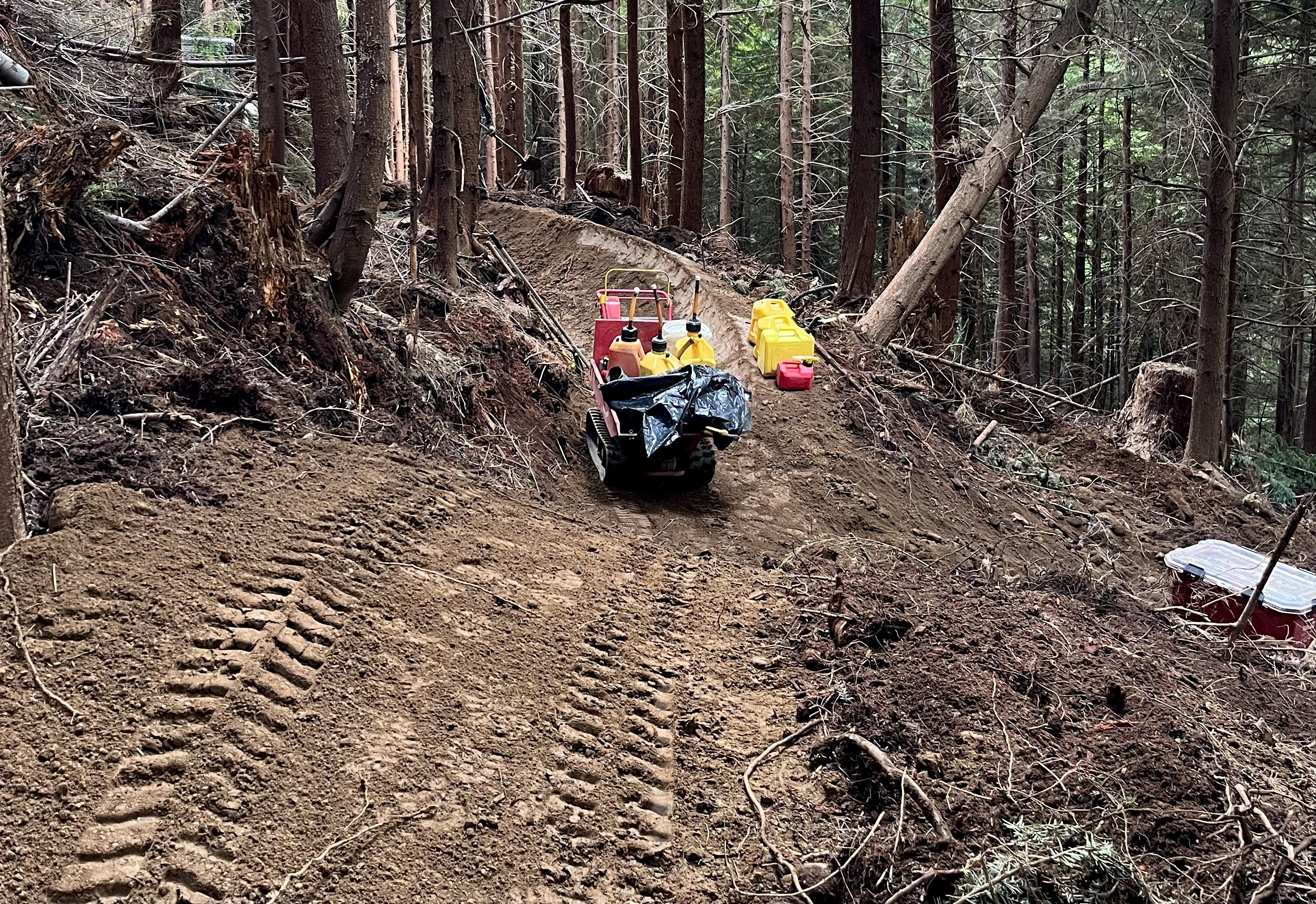
In the dead center of this photo is our trusty Canycom toter. We use it to do an initial compaction of hand worked trail and to move all of our Fuel, mechanic tools, and wildland firefighting equipment. Every couple of weeks, we have to resupply Diesel for the excavator. This re-supply run was 30 gallons costing $156 dollars. It’s not uncommon for riders in the community to buy their local trail builders a round of beers, but for this project we just wanted a round of diesel to quench the thirst of our machine friends to help keep us moving on this amazing new trail.
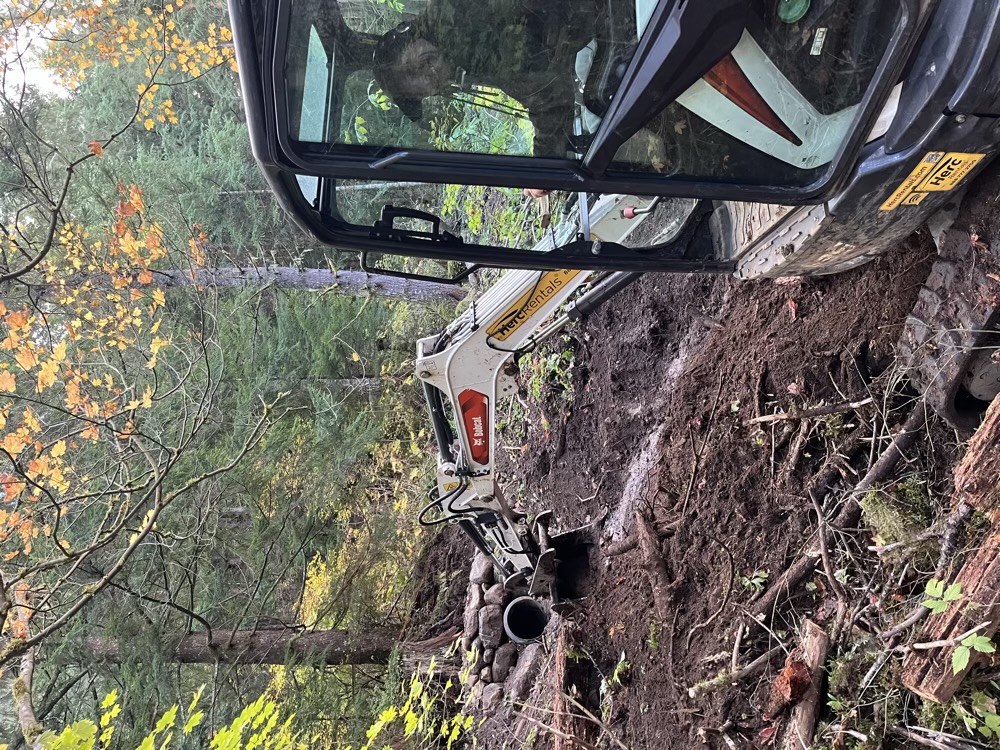
Managing Water
In this photo, Michael Fischer is pictured off trail in the excavator. Sometimes managing water takes careful planning. Below him is the next leg of the trail. He is digging a ditch to direct the water coming from above into a ditched section of trail below. The reason to direct this water is ecological in nature. To the left in the photo is a seasonal creek. By diverting the water away from it, we minimize the amount of sediment that is delivered to the waterway. Sediment in creeks and rivers is harmful to fish and other aquatic life.
Building Ditches, Culverts, Jumps
It is annoying and expensive to run into ground water in the trail corridor, but it creates increased opportunities for creativity. When you use culverts, you get to throw out some of the trail building rules of drainage. Traditionally when an insloped turn terminates, you have to have an outsloped drain to get water off the trail at the end of the turn. Oftentimes, obstacles like trees or rocks make it difficult to put the radius of the turn and the drain where you want them for maximum speed and sustainability. When you drain to the uphill side of the trail into the ditch and culvert, the inslope and carry as long as you want it to. (Well beyond when you are actually still turning. This creates more than one line through the turn.)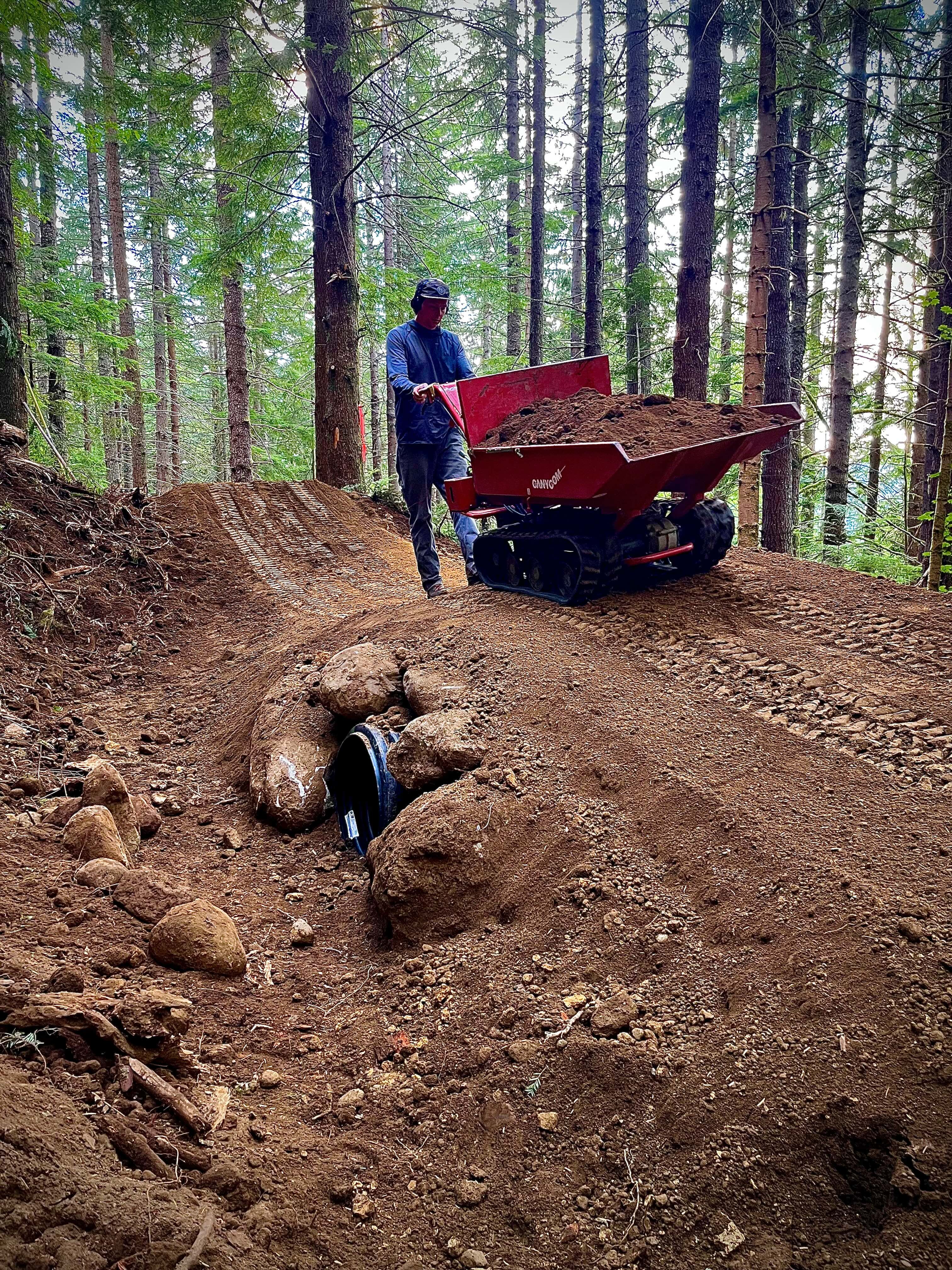
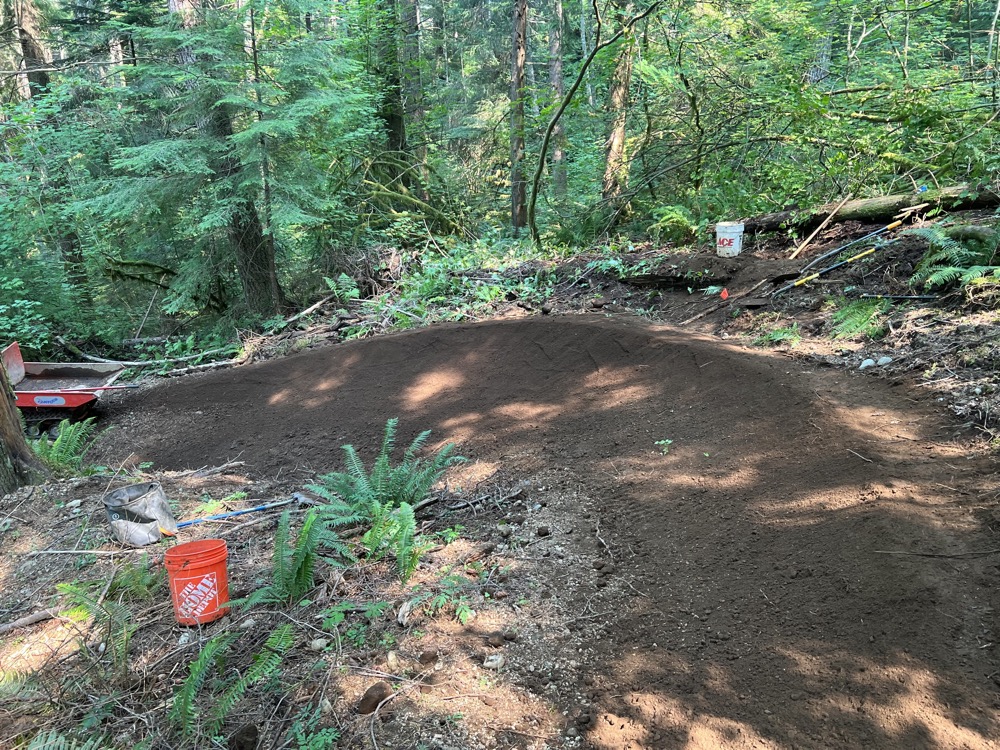
The culvert also allows us to dig heavily below trail depth uphill and creates a TON of dirt for the surrounding features. The majority of the dirt for this table top jump on the left of the photo came from the ditch and back slope uphill of the culvert. Trail segments like this are expensive because of the cost of the culvert, the additional time collecting and placing the rocks for the head wall of the pipe, and sometimes slow equipment operation when soils are saturated.
Trail Character: Tight Trees and Natural Features
Trail C has a different feel than many of the machine built trails I have worked on in the past. Working with a 3.5 ton excavator has its pros and cons. The larger reach and powerful engine efficiently moves more dirt than small trail machines. The downfall to this is its size, coming in at 4.5’ wide. Typically trails built with this size of excavator end up with a wide corridor to facilitate working space. This leaves behind a wide open trail with a bit of an unnatural feel.
The goal on trail c was to keep the corridor tighter to create a narrower and more natural feeling trail. In many areas the machine worked around trees and obstacles often pushing the limits of the machine and operator. Trail C has more tight squeezes and natural obstacles than the average flow trail. Building with the terrain and working with natural features gives the trail more of a technical feel than other machine built trails. While this frequently challenged excavator operating, it created a unique trail experience.
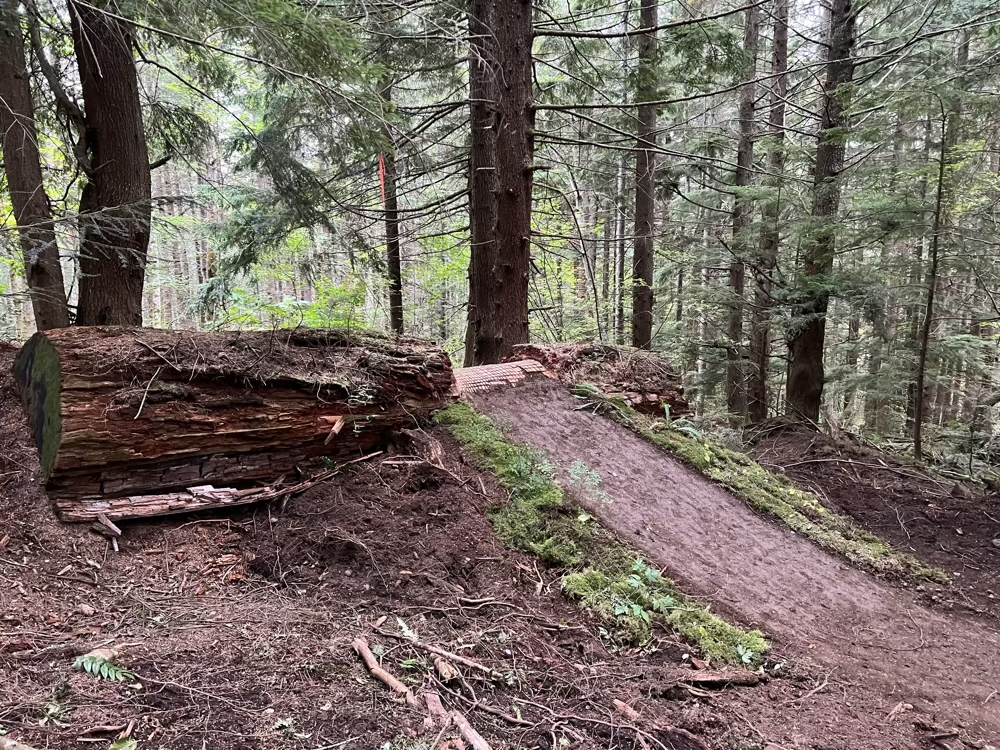
Large rocks, tree roots and logs were not removed but instead had tread built up to them to create unique features. Where the mountain provided features we did our best to use them and retain a rougher feel, in the end it is “mountain” biking after all. Numerous built up wide radius berms and rollers bring in a flowy feel that keeps speeds high.
Trail construction is now nearly finished, and our team will spend the next couple of weeks fine-tuning features and shaping lines until the official grand opening in mid-October. STAY TUNED!